How To Reply To Trustpilot Reviews Faster With AI
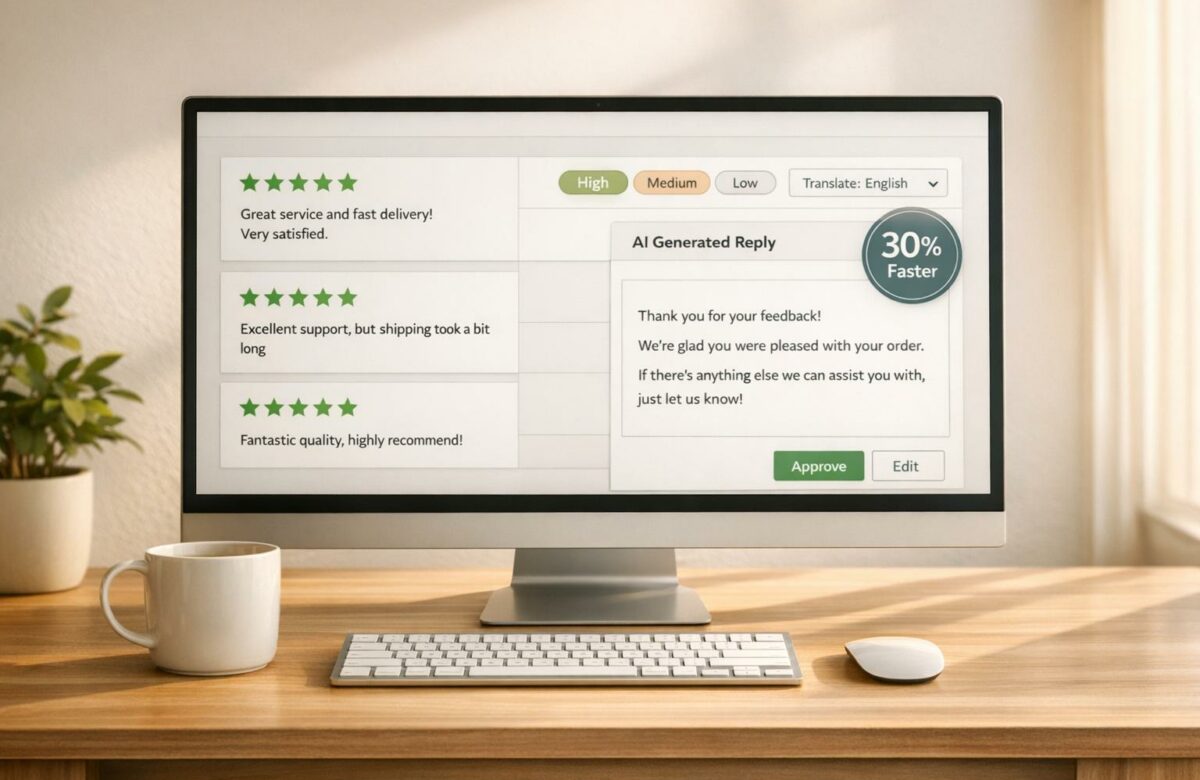
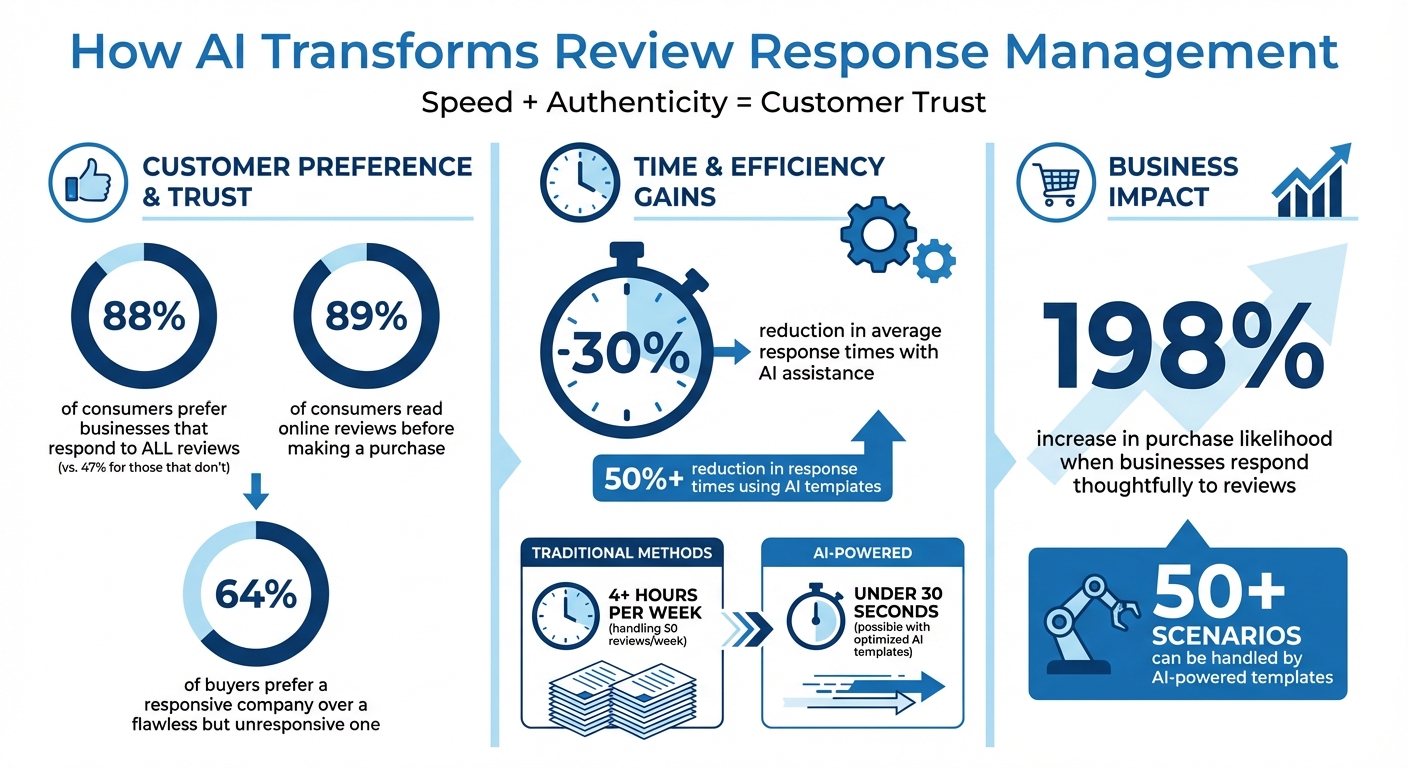
Responding to Trustpilot reviews quickly is essential for building customer trust and improving engagement. Businesses that reply to all reviews are preferred by 88% of consumers, compared to 47% for those that don’t. However, managing reviews can be time-consuming – replying to just 50 reviews a week can take over four hours. AI tools solve this by reducing response times by 30% while maintaining a brand-aligned tone.
Here’s what AI can do:
Transform Any Text, On Any Site, In Seconds
Rephrase, translate, and improve text with one shortcut. Works everywhere you write.
Add to Chrome - It's Free!- Create draft replies: AI analyzes reviews for tone and key topics like delivery or product issues, generating tailored responses.
- Support multilingual customers: AI handles reviews in various languages, crafting replies in the reviewer’s native tongue.
- Prioritize urgent feedback: AI sorts reviews by sentiment and urgency, helping teams focus on critical issues first.
- Integrate with tools: Platforms like Zendesk and Hootsuite streamline workflows by centralizing review management.
AI tools work best when paired with human oversight. Use AI to handle routine replies, but review and personalize responses to maintain a genuine connection with customers. This balance ensures faster, more effective communication while keeping your brand voice intact.
AI-Powered Review Response Statistics and Benefits
90 review response examples on Trustpilot
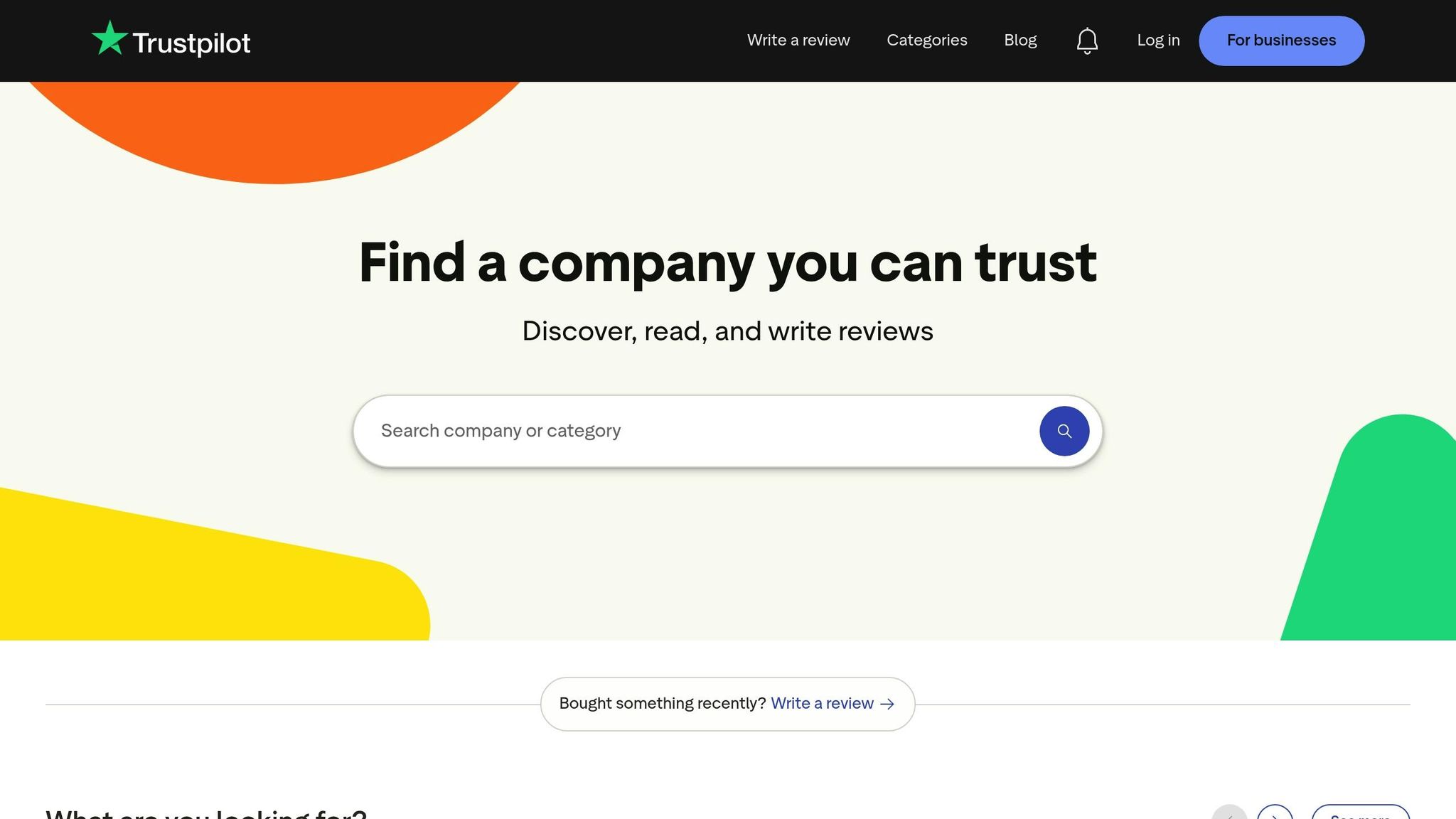
How AI Speeds Up Trustpilot Review Responses
AI takes the hassle out of managing reviews by analyzing customer feedback and creating draft responses in just seconds. Using Natural Language Processing (NLP), it scans reviews to pinpoint key details – like mentions of "fast shipping", "product quality", or specific complaints – so you can respond more effectively.
These tools can also gauge the tone of feedback – whether it’s positive, neutral, or negative – and adjust responses accordingly. For instance, a 1-star review might prompt an apology template, while a 5-star review gets a simple thank-you.
Automating Response Drafts with AI
AI platforms craft initial drafts tailored to the content of each review. If a customer writes about "delayed delivery", the AI acknowledges that issue directly instead of offering a generic reply. Over time, it learns from your past responses, adapting to your brand’s tone and typical problem-solving approaches. The result? Responses that feel more aligned with your brand voice.
This works best when paired with human-in-the-loop workflows. AI handles the groundwork, while your team reviews and personalizes the drafts before publishing. Trustpilot reports that their AI-assisted tool reduced average response times by 30% during pre-launch testing.
Personalizing Responses for High-Volume Reviews
Even when dealing with a large volume of reviews, AI ensures your responses stay on-brand. Advanced tools let you choose a tone – whether professional, friendly, or playful – so your replies feel consistent, no matter how many you’re sending out in a day. AI can also personalize responses by including customer names and referencing specific products or services mentioned in the reviews.
"The AI should generate the first draft, but a team member must always review, edit, and personalize the text to add your unique brand voice and accurately address the customer’s comments before publishing."
- Ben Salomon, Growth Marketing Manager, Yotpo
For efficiency, consider tiered automation: fully automate simple thank-you replies while using AI drafts for more complex negative feedback. This approach ensures you’re not wasting time on routine responses but still giving thoughtful attention to customers in need of solutions. AI also shines when supporting global audiences.
Multilingual Support for International Customers
AI doesn’t just speed up responses – it also helps you connect with global customers by breaking down language barriers. It can detect and process reviews written in different languages, generating replies in the reviewer’s native tongue. Of course, your team can review and refine these responses before they go live . Thanks to semantic language awareness, the translations capture the right context and subtleties, avoiding clunky word-for-word conversions.
This combination of speed and precision makes it easier for businesses to handle feedback from international customers, all without needing a dedicated multilingual support team.
Using AI Tools to Manage Review Responses
Trustpilot’s built-in AI tool works seamlessly with platforms like Zendesk, Freshdesk, Slack, and Hootsuite, simplifying the process of managing reviews. It can auto-generate reply drafts, allowing your team to handle responses within a single workflow. For example, you can configure Slack to notify your team instantly when new reviews come in, which is especially useful for addressing negative feedback quickly. However, it’s important to treat these AI-generated drafts as starting points – your team retains full control to edit and ensure every response feels genuine before it’s published. These integrations make managing reviews more efficient by connecting directly with your helpdesk systems.
Connecting AI Tools with Trustpilot
By integrating AI with Trustpilot, you create a centralized hub for managing reviews. If your team already uses a helpdesk platform like Zendesk or Freshdesk, Trustpilot reviews can be routed directly into your ticketing system. This eliminates the hassle of juggling multiple dashboards. Using natural language processing (NLP), the AI tool scans incoming reviews, categorizing them by sentiment and topic.
"The more you customize, the better the AI will understand and adapt to your brand’s unique voice." – Trustpilot
During pre-launch testing, businesses utilizing AI-assisted responses reduced their response times by an average of 30%. This faster response rate not only improves customer communication but also frees up your team to focus on resolving more complex issues. With everything centralized, AI further improves efficiency by analyzing sentiment across reviews.
Analyzing Sentiment and Prioritizing Urgent Reviews
AI tools act as an early-warning system, automatically sorting reviews into positive, negative, or neutral categories. They also group reviews by themes like "Customer Service", "Payment", or "Product Quality", helping teams quickly identify trends and recurring issues. This makes it easier to prioritize urgent 1-star and 2-star reviews while automating simple "thank you" replies for glowing 5-star feedback.
Tools such as Review Spotlight take this a step further by summarizing thousands of reviews into concise weekly or monthly reports using generative AI. Instead of reading through every single review, you get a clear snapshot of common themes and actionable insights. Once reviews are categorized, the AI applies pre-designed templates to craft responses tailored to each situation.
Reducing Response Time with Pre-Built Templates
Pre-built templates have become smarter, dynamically adjusting based on the context of each review. Leveraging NLP and sentiment analysis, these templates can adapt to more than 50 scenarios, cutting response times by 50% or more – sometimes even to under 30 seconds – while still allowing for manual edits to maintain a personal touch. For instance, if a customer mentions "fast shipping" or "great product fit", the AI adjusts the response to address those specifics. You can further personalize replies by adding details like replacing "your order" with "your new leather jacket", ensuring responses feel authentic and tailored.
This approach strikes a balance between automation and personalization, enabling teams to respond quickly while keeping replies genuine and relatable.
sbb-itb-32359dc
Keeping AI Responses Authentic and Personal
AI-generated drafts are a useful starting point. These tools can handle the bulk of creating initial responses, but remember: AI should be your assistant, not your replacement. After all, most people check online reviews before making a purchase.
Reviewing and Editing AI-Generated Replies
Before hitting publish, take a moment to review. Make sure the AI has accurately addressed the customer’s concern and reflects your brand’s tone. Personalization goes a long way – swap generic phrases like "your order" for something more specific, such as "your blue suede loafers". When responding to negative reviews, avoid vague apologies. Instead, offer clear solutions, like providing a direct support email or the contact information of a manager.
"AI-generated responses must be proofread by a human before posting… Using AI for automated responding can potentially lead to errors that make you look bad to your customers and prospects; it could also put your organization at legal liability if used incorrectly."
- Jessie Richardson, Senior Product Manager, ReviewTrackers
Steer clear of repetitive phrases like "thrilled" or overly formal sign-offs such as "Sincerely, [Name]." Adjust your prompts to produce responses that feel natural and aligned with your brand’s voice. This extra effort ensures a balance between the convenience of automation and the warmth of human touch.
Balancing Automation with Human Oversight
AI can handle the basics, but more complex or sensitive reviews demand a human touch. For example, a simple 5-star review with no accompanying text might only need minor tweaks. On the other hand, negative or nuanced feedback requires a full review by a person. In industries like healthcare or situations involving legal concerns, human oversight is critical to ensure compliance with regulations like HIPAA or to avoid unintentionally admitting liability.
"AI is your helper, not a replacement. Use AI to handle the heavy lifting, but let your human expertise shine where it matters most – understanding complex emotions, crafting personalized responses, and delivering genuine empathy."
- Tobias Roelen-Blasberg, Co-Founder & Head of Product, MARA Solutions
It’s also worth gathering feedback from your customers periodically. This helps you fine-tune your AI-human workflow to meet their expectations for authentic, thoughtful interactions. After all, 88% of consumers trust businesses more when they actively respond to reviews. Maintaining this trust is key to building lasting relationships with your audience.
Conclusion
AI can reduce response times by a striking 30%, giving your team more bandwidth to address customer concerns effectively. This speed isn’t just about efficiency – it directly impacts customer perception. For instance, 88% of consumers prefer businesses that respond quickly, and a thoughtful reply can turn a mediocre review into a positive experience, increasing the likelihood of a purchase by an impressive 198%. Moreover, 64% of buyers are more inclined to choose a responsive company over one that seems flawless but fails to engage.
To make the most of these benefits, start small – use AI for handling straightforward reviews, then gradually expand its role as your processes evolve. Pairing AI’s speed with your team’s authentic, personal touch ensures your brand voice remains consistent and relatable. The aim isn’t to replace human expertise but to enhance it. With 89% of consumers reading online reviews before making a purchase, being both prompt and genuine in your responses isn’t just good practice – it’s a must for staying competitive and building meaningful customer relationships. This blend of efficiency and authenticity can make all the difference.
FAQs
How does AI ensure your responses match your brand’s tone?
AI can help keep your brand’s voice consistent by offering personalized, context-aware suggestions that match your company’s unique communication style. These tools are built to deliver responses that align seamlessly with your brand identity, ensuring a unified tone across all interactions.
To maintain precision, AI systems can be fine-tuned and monitored by your team. You have the ability to review, edit, and approve responses before they go out. This balance of intelligent automation and human input ensures your customer interactions not only save time but also remain perfectly aligned with your brand’s messaging.
Can AI effectively manage complex or sensitive customer reviews?
AI plays a valuable role in managing complex or sensitive customer reviews by analyzing the tone, sentiment, and specific details of the feedback. With the help of natural language processing (NLP) and machine learning, these tools can craft context-aware responses that address customer concerns while staying true to your brand’s voice.
For particularly sensitive reviews – like those involving serious complaints or emotional topics – AI serves best as a support system. It can provide draft suggestions that a human can refine to ensure the response feels genuine and empathetic. By blending AI-generated drafts with human input, businesses can respond more quickly without losing the personal touch that’s crucial in delicate situations. This balance helps maintain both efficiency and authenticity in customer interactions.
What are the advantages of using AI with tools like Zendesk or Hootsuite?
Integrating AI with tools like Zendesk or Hootsuite can bring businesses a host of advantages. One standout benefit is how AI simplifies customer interactions by delivering personalized and efficient communication. For example, AI-driven chatbots, powered by natural language processing (NLP), can understand and respond to customer questions instantly. This not only saves time but also boosts customer satisfaction.
AI also steps in to handle reviews and feedback more effectively. It can suggest or even generate tailored responses, ensuring businesses reply quickly and consistently. This kind of responsiveness helps build trust and strengthens a company’s reputation. On top of that, AI can analyze customer sentiment in reviews, uncovering insights that can guide improvements in products or services. By automating routine tasks, AI frees up teams to concentrate on bigger-picture strategies, all while keeping the customer experience top-notch.
Related Blog Posts
- The Ultimate Guide to AI Response Generators: How to Automate Smart Replies Effortlessly!
- Boost Productivity With Ai-powered Text Response Generators
- Top 10 AI Tools for Multilingual Customer Support
- How to Generate Instant Polite Email Replies for Client Inquiries
BeLikeNative fixes grammar, rephrases, translates, and simplifies text on any website in 1 second — just highlight and hit a keyboard shortcut. No tab switching. Try it free →