
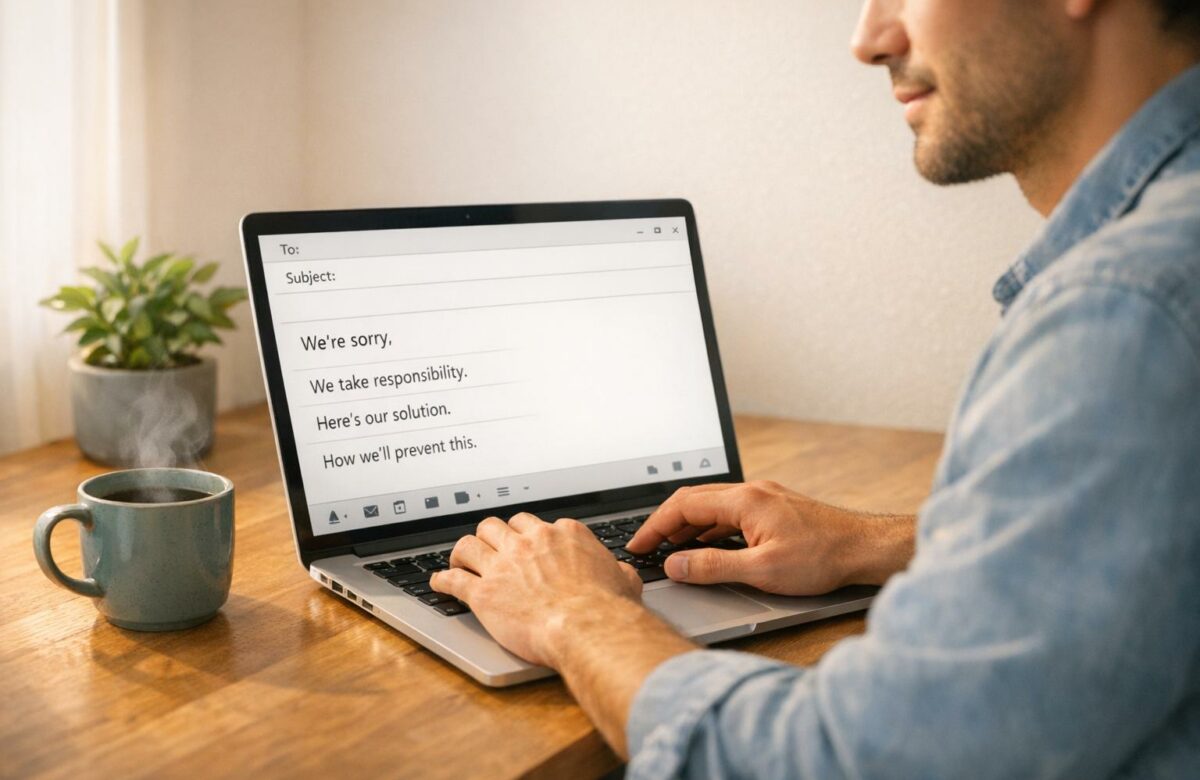
How To Write A Customer Apology Email That Soothes Anger
When a customer is upset, a well-crafted apology email can rebuild trust and even strengthen your relationship. Here’s how to get it right:
- Be Timely: Respond quickly – 46% of people expect a reply within three days.
- Acknowledge the Issue: Use a clear subject line like "We Messed Up" and address the customer by name.
- Take Responsibility: Avoid dismissive phrases like "Sorry you feel that way." Own the mistake directly.
- Explain Briefly: Share what happened in simple terms without over-explaining or shifting blame.
- Offer a Solution: Provide a clear resolution, like a refund or discount, with a specific timeline.
- Prevent Future Issues: Reassure the customer by explaining steps to avoid similar problems.
- Invite Feedback: Encourage them to reply or reach out if they have further concerns.
A sincere apology paired with a solution can turn frustration into loyalty. Customers are more likely to forgive when you show empathy, take responsibility, and act swiftly.
How to Write a Complaint Response Email to a Customer
sbb-itb-32359dc
Core Components of a Customer Apology Email
A thoughtful apology email has five key elements that help diffuse frustration and rebuild trust with your customers.
First, your subject line sets the stage. Use straightforward and honest language like "Our Sincere Apology" or "We Messed Up" to immediately signal accountability and transparency. This prepares the recipient for a message that takes their concerns seriously.
Next, start with a personalized greeting. Address the customer by name and refer to their specific issue – whether it’s an order number or a brief mention of their complaint. This small step goes a long way in showing that you’ve listened and understand their frustration. In fact, 96% of customers say empathy is critical in service interactions.
Then, offer a genuine apology that takes full responsibility. Avoid phrases like, "We’re sorry you feel that way," which can come across as dismissive. Instead, say something like, "We’re sorry for the mistake on our end." For example, when Wealthsimple mistakenly sent a customer’s withdrawal to the wrong bank account, they owned up to the error and acknowledged the inconvenience without making excuses.
Follow this with a brief, factual explanation of what went wrong. Transparency is key here. A great example is GitLab’s response to losing production data for around 5,000 projects in 2017. CEO Sid Sijbrandij provided a clear explanation of the incident and even shared updates in a public Google Doc. This openness turned a difficult situation into an opportunity to regain trust.
Finally, offer a clear solution. Whether it’s a refund, replacement, or discount, make sure your proposed resolution addresses the customer’s inconvenience directly. For instance, when Caskers mistakenly sent out-of-stock notifications for whiskey, they admitted the technical error and included a discount code in their apology. As they put it, "Apologies with a dollar sign attached are always better". Combining immediate resolution with steps to prevent future issues shows customers that you’re committed to making things right and improving.
7 Steps to Write a Customer Apology Email
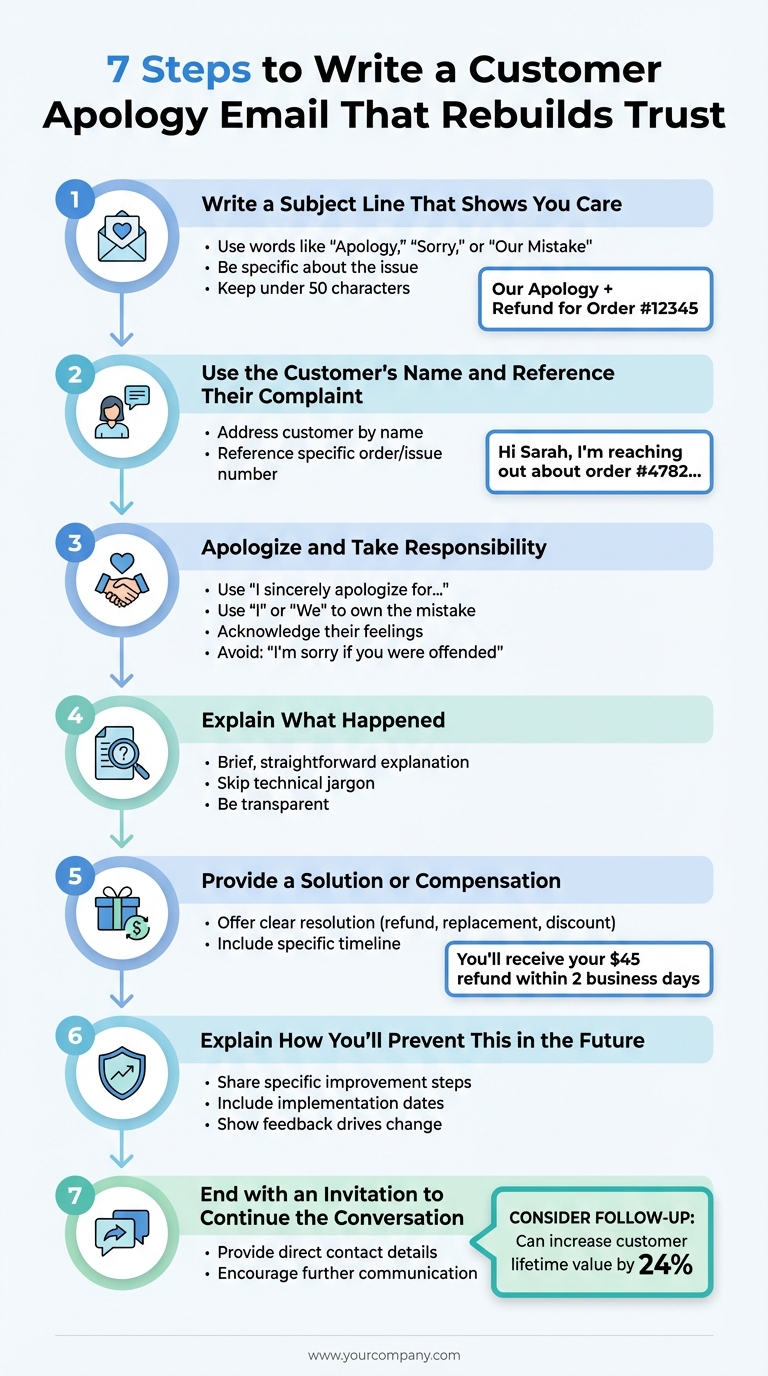
7 Steps to Write an Effective Customer Apology Email
Now that you’ve got the basics down, here’s how to pull it all together. These steps will walk you through crafting an apology email that directly addresses the issue and works to rebuild your customer’s trust.
Step 1: Write a Subject Line That Shows You Care
The subject line sets the tone – it’s the first thing your customer sees. Make it clear you’re taking responsibility by using words like "Apology", "Sorry", or "Our Mistake" right up front. Be specific about the issue, like a billing error or a delivery delay, so they know what the email is about before they even open it.
Keep it short – under 50 characters – to ensure it displays properly on mobile devices. If you’re offering compensation, mention it briefly (e.g., "Our Apology + Refund for Order #12345"). Adjust your tone based on the severity of the issue: serious for major problems like data breaches, and lighter for smaller inconveniences.
"If it’s a small inconvenience, I think you can keep it lighter. It really just depends on the severity of the problem."
- Brianna Christiano, Director of Support, Gorgias
Step 2: Use the Customer’s Name and Reference Their Complaint
Start with a personal touch by addressing the customer by name and referencing their specific complaint. For example:
"Hi Sarah, I’m reaching out about order #4782 and the incorrect item you received."
This shows you’re not just sending a generic email – you’ve read their concern and are tackling it directly. That alone can ease some of their frustration.
Step 3: Apologize and Take Responsibility
Be upfront and sincere. Say "I sincerely apologize for…" instead of vague phrases like "We regret any inconvenience." Use "I" or "We" to clearly own the mistake. Avoid language that sounds dismissive, such as "I’m sorry if you were offended." That can come across as insincere.
Acknowledge their feelings with phrases like "You are right" or "I understand why this is frustrating." Even if external factors contributed to the issue, focus on taking responsibility and showing your commitment to fixing the problem.
Step 4: Explain What Happened
Briefly explain the error in a straightforward way. Skip the technical jargon and keep it simple. For instance:
"Our payment system accidentally processed your subscription renewal twice due to a software update we implemented on March 1, 2026."
This kind of explanation helps the customer understand what went wrong while showing you’re being transparent.
Step 5: Provide a Solution or Compensation
Offer a clear resolution tailored to the situation. For example:
- For billing errors: Issue a refund and possibly a small credit for future purchases.
- For delivery delays: Refund the shipping cost and offer expedited shipping.
- For defective products: Give the option of a replacement or a full refund, maybe with an additional discount for a future order.
Always include a timeline so the customer knows when to expect the resolution. For example:
"You’ll receive your $45 refund within 2 business days."
Avoid vague promises like "We’re working on it." Specific timelines build trust.
"We ask for forgiveness using monetary incentives, because apologies with a dollar sign attached are always better."
- Caskers
Step 6: Explain How You’ll Prevent This in the Future
Reassure the customer by sharing the steps you’re taking to ensure the problem doesn’t happen again. Be specific about the improvements you’re making. For example:
"We’ve updated our inventory management system to sync in real-time with our website and added a double-check process for all order fulfillments starting March 5, 2026."
Details like these show that their feedback is driving meaningful changes.
Step 7: End with an Invitation to Continue the Conversation
Wrap up by inviting the customer to reach out if they have further concerns. Include direct contact details, like:
"If this solution doesn’t fully address your concerns, please reply to this email or call me directly at (555) 123-4567. I’m here to help."
Consider following up after the issue is resolved to ensure they’re satisfied. Research shows that structured follow-ups can increase customer lifetime value by as much as 24%.
How BeLikeNative Helps You Write Better Apology Emails
BeLikeNative helps transform apology emails into messages that feel empathetic, professional, and clear. Instead of leaning on generic phrases like "we apologize for the inconvenience", it guides you to craft more thoughtful and specific language that connects with frustrated customers. This is important because 62% of consumers believe frequent apologies can come across as insincere, making it crucial to choose your words carefully.
The tool integrates seamlessly with your clipboard. Simply paste your draft, use a shortcut, and get instant suggestions to refine tone and improve clarity. This streamlined process makes it easier to build meaningful connections with your audience.
Features That Elevate Your Apology Emails
BeLikeNative’s rephrasing tools turn rough drafts into polished, impactful emails. For example, instead of saying, "We regret any inconvenience", it can help you write something more personal like, "I understand how frustrating this delay must be for your workflow." This level of detail matters – a study by the Carey School of Business found that customer satisfaction jumped from 37% to 74% when businesses paired a genuine apology with compensation.
The platform also supports over 80 languages, ensuring your messages reflect genuine regret and professionalism, no matter the audience. This is especially useful for businesses with a global reach. You can even adjust the tone and style to fit the situation – expressing deeper empathy for serious issues or keeping it balanced for minor inconveniences.
BeLikeNative Pricing Plans
BeLikeNative offers flexible pricing options tailored to different needs:
| Plan | Price | Daily Usage Limit | Character Limit | Best For |
|---|---|---|---|---|
| Explorer | $0/month | 5 uses | 500 characters | Casual users testing the tool |
| Learner | $4/month | 25 uses | 2,000 characters | Individuals with regular communication needs |
| Native | $6/month | 50 uses | 4,000 characters | Professionals managing frequent emails |
| Premium | $14/month | 125 uses | 6,000 characters | High-volume users or teams needing extra features |
All plans include features like spelling and grammar correction, clarity improvements, and support for 80+ languages. Higher-tier plans offer additional perks like priority processing and customizable functions, which can save time when handling multiple customer complaints efficiently.
Mistakes to Avoid When Writing Apology Emails
Even a heartfelt apology can fall flat if common missteps sneak in. These errors can undermine your efforts to rebuild trust, making it crucial to choose your words carefully. Here’s what to steer clear of when crafting an apology email.
Don’t Use Generic or Insincere Language
Phrases like "we apologize for any inconvenience" might sound polite but often come off as dismissive. In fact, 72% of customers will switch brands after just one negative experience. A hollow apology can be the tipping point that drives customers away.
"A shallow ‘the inconvenience is regretted’ will do more harm than good, as customers can see through it. It’s most likely to show that your brand doesn’t genuinely care about its customers." – Harsh Vardhan, Content Lead, Hiver
Instead of relying on overused phrases, get specific. Say something like, "We sincerely apologize for the error in your order and the delay this has caused you." Avoid over-the-top adjectives or vague expressions. Simple, human language like "I made a mistake" is far more effective.
Don’t Over-Explain or Shift Blame
While a brief explanation can clarify what went wrong, avoid overwhelming your customer with technical jargon or lengthy justifications. Over-explaining can come across as defensive and distract from the apology itself.
"The reality is deflections and excuses compound the issue at hand. Those on the receiving end of the mistake care less about you laying blame elsewhere than you fixing the issue for them." – Akram Krayem, Automizy
Never point fingers at third parties like couriers or vendors, and certainly don’t imply the customer is at fault. Phrases like "I’m sorry, but…" weaken your apology by turning it into an excuse. Instead, take full ownership with personal language – "I" or "we" – and keep the focus on resolving the issue. Acknowledge the error briefly, then pivot to how you’re making it right.
Always Offer a Clear Solution
An apology without action is just empty words. 96% of customers feel disloyal after high-effort experiences, like having to chase a company for answers. Don’t leave them guessing about what happens next.
Be specific about next steps. Replace vague promises like "we’re working on it" with a clear timeline for resolution. Show your commitment by offering something concrete – whether it’s a refund, discount, or store credit. Finally, invite feedback to demonstrate that you’re not just apologizing but actively looking to improve.
Conclusion
Writing a customer apology email that works comes down to empathy, clarity, and actionable follow-up. These are the key elements that help calm frustration and rebuild trust. By validating the customer’s feelings and acknowledging how the mistake affected them, you’re showing that their concerns genuinely matter.
Taking responsibility is crucial. Avoid vague or passive phrases and instead use direct "I" statements like "I made an error." Pair this with a brief, honest explanation of what went wrong. From there, shift the focus to how you’re addressing the issue – be specific about the steps you’re taking and include clear timelines.
"An apology should focus less on the mistake itself and more on the impact it had on the person you’re apologizing to. True accountability is recognizing the consequence of your actions." – Kejoola
Make sure to outline a solution, explain how you’ll prevent similar mistakes in the future, and invite further communication. Timing is also critical – responding within 24–48 hours can prevent minor frustrations from escalating into lasting resentment.
FAQs
How do I apologize without sounding insincere?
To convey sincerity, prioritize true empathy and take clear responsibility. Recognize the customer’s emotions, use thoughtful and personalized language, and steer clear of generic or overly formal expressions. Accept responsibility openly – without excuses – and present a meaningful solution. This method shows you genuinely care, helps rebuild trust, and assures the customer that their concerns are both heard and respected.
When should I offer a refund or discount?
When a mistake, delayed delivery, or billing error causes significant inconvenience or dissatisfaction, offering a refund or discount can make a big difference. It demonstrates accountability and empathy, which are key to rebuilding trust and easing frustration. This approach is particularly important when the issue results from a service failure or error that clearly calls for compensation to help restore the customer’s confidence and satisfaction.
How do I explain what happened without making excuses?
When addressing what happened, it’s important to emphasize accountability rather than trying to justify the mistake. Start by acknowledging the error openly and showing genuine empathy for how it affected the customer. Then, provide a straightforward explanation without deflecting blame. This approach shows honesty and responsibility, helping to rebuild trust and calm the situation.